The sweet and savory aroma of this Korean Beef Bulgogi Recipe fills the kitchen and instantly sparks an appetite. What makes this dish so special is how quickly the tender, marinated beef cooks—perfect for a fast yet impressive meal that’s full of flavor and soul.

Why You’ll Love This Recipe
- Quick Cooking Time: The thin slices of beef cook in just minutes, perfect for busy weeknights.
- Flavorful Marinade: A balanced blend of sweet, spicy, and savory makes every bite irresistible.
- Versatile: You can enjoy it in rice bowls, wraps, or even salads.
- Family Favorite: This recipe always gets the crowd going crazy for more.
Ingredients You’ll Need
The magic of this Korean Beef Bulgogi Recipe lies in its harmony of ingredients—each one bringing depth and authentic Korean flavors. For the best results, choose fresh, quality ingredients, especially the beef and pear that tenderize and sweeten the meat naturally.

- Boneless rib eye steak: This cut is tender and flavorful, ideal for quick cooking and absorbing marinade.
- Small pear: Acts as a natural tenderizer and adds subtle sweetness without overpowering.
- Reduced sodium soy sauce: Provides salty umami base; low sodium helps balance the flavor.
- Brown sugar: Enhances sweetness and caramelizes beautifully during cooking.
- Toasted sesame oil: Adds nutty richness, giving bulgogi its signature aroma.
- Garlic cloves: Fresh garlic shines in marinades—don’t skip it!
- Freshly grated ginger: Brings warmth and a slight zing that lifts the dish.
- Gochujang (Korean red pepper paste): For that mild heat and deep red color; adjust if you prefer less spice.
- Vegetable oil: For cooking; a neutral oil ensures the marinade flavors stay front and center.
- Green onions: Freshly sliced for garnish, adding crunch and brightness.
- Toasted sesame seeds: A final sprinkle for texture and visual appeal.
Variations
I love making this Korean Beef Bulgogi Recipe my own by tweaking the heat level and even experimenting with different proteins. Feel free to adjust the marinade or pairings to suit what you have at home or your palate!
- Spicy Boost: I sometimes add extra gochujang or a dash of chili flakes when I’m craving more heat—it turns out amazing.
- Vegetarian Twist: Swap beef for thickly sliced mushrooms or tofu marinated in the same sauce for a delicious plant-based option.
- Sweetness Swap: If you can’t find pear, apple or kiwi works well as a tenderizer and sweetener.
- Grilling Option: Using an outdoor grill adds a fantastic smoky char that I adore on summer nights.
How to Make Korean Beef Bulgogi Recipe

Step 1: Prep the Beef for Tender Slices
Start by wrapping your rib eye steak tightly in plastic wrap and popping it in the freezer for about 30 minutes. This little trick firms up the meat, making it much easier to slice thinly across the grain—aim for about 1/4-inch thick slices. Thin slices cook quickly and soak up that incredibly flavorful marinade.
Step 2: Mix Your Marinade and Let It Work Its Magic
In a bowl, whisk together pear, soy sauce, brown sugar, toasted sesame oil, garlic, ginger, and gochujang. I discovered this blend balances savory, sweet, and spicy perfectly. Pour this marinade into a large Ziploc bag with your sliced beef. Seal it up and massage the marinade into every piece before refrigerating for at least 2 hours. For the best tenderness and flavor, overnight is golden.
Step 3: Cook Quickly on a Hot Pan
Heat a tablespoon of vegetable oil in a cast iron grill pan over medium-high heat. Working in batches (so you don’t overcrowd the pan), lay the beef strips in a single layer. Cook each side for 2-3 minutes until charred and cooked through. Don’t overcook—those thin slices go from perfect to tough fast. Repeat with remaining oil and beef. You’ll smell that irresistible caramelization right away!
Step 4: Garnish and Serve Immediately
Once cooked, transfer your bulgogi to a serving plate and sprinkle generously with sliced green onions and toasted sesame seeds. Serve it piping hot for the best flavor experience.
Pro Tips for Making Korean Beef Bulgogi Recipe
- Thinly Slice with Partially Frozen Meat: Freezing the steak for 30 minutes firms it up, which is the best way to get those perfect thin slices that soak up marinade.
- Marinate Overnight for Best Flavor: While 2 hours is fine, marinating overnight transforms the meat, making it more tender and flavorful.
- Cook in Batches to Avoid Steaming: Crowding the pan traps moisture, so cook the beef in small batches to keep that nice char and texture.
- Use a Cast Iron Grill Pan or Skillet: Cast iron retains heat beautifully, giving your bulgogi those delicious sear marks and that signature caramelized crust.
How to Serve Korean Beef Bulgogi Recipe

Garnishes
I always finish with fresh green onions and toasted sesame seeds because they add a fresh crunch and subtle nuttiness that balances the rich meat perfectly. Sometimes I throw in a few thin slices of fresh chili or a drizzle of extra sesame oil for extra pop.
Side Dishes
My go-to sides are steamed jasmine rice or sticky white rice, along with kimchi for that classic Korean tang. You could also serve it wrapped in crisp lettuce leaves with some sliced cucumbers and shredded carrots for a fresh contrast.
Creative Ways to Present
For special gatherings, I love setting up a DIY bulgogi lettuce wrap station with bowls of garnishes and sides, letting everyone build their own wraps. It makes dinner interactive and super fun. I’ve even stuffed bulgogi into steamed bao buns for a fusion twist that was a big hit at a party!
Make Ahead and Storage
Storing Leftovers
I store leftover bulgogi in an airtight container in the fridge for up to 3 days. It’s still delicious cold, but I find reheating brings out the flavors even more.
Freezing
I’ve had luck freezing the marinated beef before cooking, which is perfect if you want to prep in advance. Freeze in a sealed bag, then thaw completely in the fridge before cooking. Cooked bulgogi can also freeze but reheats best when freshly cooked.
Reheating
When reheating, I like to toss leftovers quickly in a hot skillet for just a minute or two to warm through and revive that slight caramelized texture, rather than microwaving, which can make it tough.
FAQs
-
Can I use a different cut of beef for Korean Beef Bulgogi Recipe?
Absolutely! While rib eye is tender and flavorful, you can also use sirloin or flank steak. Just be sure to slice the meat thinly and against the grain to keep it tender after cooking.
-
What can I substitute for gochujang?
If you don’t have gochujang on hand, you can mix a bit of miso paste with chili flakes or sriracha to approximate the flavor, but the unique fermented red pepper taste of gochujang is hard to replicate exactly.
-
How long should I marinate the beef for the best flavor?
Marinating for at least 2 hours works well, but letting it sit overnight in the fridge takes the flavor and tenderness to the next level—don’t rush it if you can help it!
-
Can I make this recipe vegetarian?
Yes! Try substituting the beef with mushrooms, tofu, or tempeh, marinated in the same sauce to enjoy the flavors of bulgogi without the meat.
Final Thoughts
Honestly, Korean Beef Bulgogi Recipe is one of those dishes I keep coming back to—it’s quick, packed with crowd-pleasing flavor, and never fails to impress. Whether you’re cooking for friends or a cozy night in, I highly recommend giving it a try. Once you nail the marinade and perfect those quick sears, it’ll quickly become a favorite in your rotation, too.
Print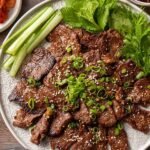
Korean Beef Bulgogi Recipe
- Prep Time: 2 hours 45 minutes
- Cook Time: 15 minutes
- Total Time: 3 hours
- Yield: 6 servings 1x
- Category: Main Course
- Method: Grilling
- Cuisine: Korean
Description
This Korean Beef Bulgogi recipe features thinly sliced rib eye steak marinated in a flavorful blend of pear, soy sauce, garlic, and gochujang. The meat is quickly grilled to tender perfection, making it a perfect dish for a delicious and easy Korean BBQ experience at home.
Ingredients
Meat
- 1 ½ pounds boneless rib eye steak
Marinade
- ½ small pear, peeled and coarsely grated
- ¼ cup reduced sodium soy sauce
- 2 tablespoons brown sugar
- 2 tablespoons toasted sesame oil
- 3 cloves garlic, minced
- 1 tablespoon freshly grated ginger
- 1 tablespoon gochujang, Korean red pepper paste
Cooking & Garnish
- 2 tablespoons vegetable oil, divided
- 2 green onions, thinly sliced
- 1 teaspoon toasted sesame seeds
Instructions
- Prepare the Steak: Wrap the rib eye steak in plastic wrap and place it in the freezer for 30 minutes to firm up. Then unwrap and slice the steak across the grain into ¼-inch thick slices to ensure tenderness.
- Make the Marinade: In a medium-sized bowl, combine the grated pear, reduced sodium soy sauce, brown sugar, toasted sesame oil, minced garlic, freshly grated ginger, and gochujang. Mix well until fully blended.
- Marinate the Steak: Place the sliced steak and the marinade into a gallon-size Ziploc bag, seal it, and massage to coat the meat evenly. Refrigerate and marinate for at least 2 hours, up to overnight, turning the bag occasionally to ensure even marinating.
- Heat the Grill Pan: Heat 1 tablespoon of vegetable oil in a cast iron grill pan over medium-high heat until hot but not smoking.
- Cook the Bulgogi: Working in batches, lay slices of the marinated steak in a single layer on the grill pan. Cook for about 2 to 3 minutes per side, until the meat is nicely charred and cooked through. Repeat this process using the remaining 1 tablespoon of vegetable oil and the remaining steak slices.
- Serve and Garnish: Serve the bulgogi immediately, garnishing with thinly sliced green onions and toasted sesame seeds to add fresh flavor and texture.
Notes
- If you do not have a cast iron grill pan, a large cast iron skillet works well as an alternative for cooking the bulgogi.
- Marinating the steak overnight will enhance the flavor and tenderness even more.
- Adjust the amount of gochujang for more or less spiciness according to your taste preference.
- For a gluten-free version, substitute the soy sauce with tamari sauce.
- Make sure not to overcrowd the pan when cooking the steak to ensure proper searing and charring.
Nutrition
- Serving Size: 1 serving
- Calories: 320 kcal
- Sugar: 6 g
- Sodium: 550 mg
- Fat: 18 g
- Saturated Fat: 5 g
- Unsaturated Fat: 11 g
- Trans Fat: 0 g
- Carbohydrates: 12 g
- Fiber: 1 g
- Protein: 28 g
- Cholesterol: 80 mg