

Picture biting into a golden, crackling crust that gives way to juicy, tender chicken inside—that’s exactly why this Korean Fried Chicken Recipe has become one of my absolute favorites to make at home. The magic is in the double fry and that unforgettable glaze that’ll have everyone asking for seconds.

Why You’ll Love This Recipe
- Crispy Yet Juicy: The double frying makes the chicken skin perfectly crunchy without drying out the meat inside.
- Versatile Sauces: Choose between sweet soy garlic or the spicy-sweet gochujang glaze—the flavor options are fantastic.
- Great for Sharing: This recipe yields plenty, making it a crowd-pleaser for dinner or parties.
- Simple Ingredients: No hard-to-find items here, just good ingredients you might already have or can easily grab.
Ingredients You’ll Need
Every ingredient plays a role in making this Korean fried chicken recipe a standout. I love using freshly grated ginger and garlic to really boost the flavor, and the starch type you choose affects how crispy your chicken ends up. Here’s what to keep in mind when you’re shopping.

- Chicken Wings: Perfect bite-sized pieces—make sure they’re dry before you start for a better crust.
- Garlic: Both minced and grated for marinade and sauces, it adds that bold, comforting flavor.
- Ginger: Freshly grated ginger gives a subtle warmth and brightness.
- Mirin: A little sweet rice wine that tenderizes and adds depth—don’t skip it!
- Sea Salt: Essential for seasoning the wings before frying.
- Flour, Cornstarch, or Potato Starch: Each gives a different texture—potato starch yields the crispiest crust, flour is more traditional, and cornstarch balances well.
- Baking Powder: Helps give the batter extra crunch.
- Vegetable Oil: For frying—must have a high smoke point.
- Honey: Sweetens the sauces naturally and balances the heat.
- Soy Sauce: Adds saltiness and umami.
- Rice Wine Vinegar: Brings acidity to balance sweetness in the sauces.
- Hoisin Sauce: Adds richness and a touch of tanginess to the soy garlic sauce.
- Toasted Sesame Oil: Just a splash brightens up the sauces and smells amazing.
- Gochujang: That spicy Korean chili paste that gives the gochujang sauce its trademark kick.
- Strawberry Jam: The secret weapon in the gochujang sauce—adds a fruity sweetness that rounds out the heat.
- Ketchup: Helps balance flavor and thickness in the spicy sauce.
Variations
I love mixing it up depending on my mood or what’s in the pantry. This Korean fried chicken recipe is super adaptable, so don’t be afraid to experiment!
- Wet Batter Version: I tried the wet batter method once when friends came over and the chicken turned out extra light and airy—I definitely recommend it if you want a different texture.
- Spicy Level Adjustments: Feel free to tweak the amount of gochujang or honey in the sauce to make it as fiery or mild as you like.
- Gluten-Free: Using potato starch makes it easier if you’re avoiding gluten.
- Boneless Option: Swap wings for boneless chicken thighs for easier eating, though wings have that classic texture I adore.
How to Make Korean Fried Chicken Recipe

Step 1: Marinate to Infuse Flavor
Start by seasoning your chicken wings with finely minced garlic, freshly grated ginger, sea salt, and a splash of mirin. Let them soak up those flavors for at least an hour—this step makes a huge difference in how tasty each bite turns out. When I first made this, I skipped the marinating and the flavor just didn’t have the same punch.
Step 2: Coat Every Wing Thoroughly
Mix your dry batter—flour or potato starch, along with baking powder—in a big bowl. Then, coat each wing carefully so it’s evenly covered. This ensures that perfect crispy crust we all love. I like to pat the coating on lightly so it sticks well and creates an even layer. Don’t rush this part—you’ll thank yourself later!
Step 3: The Art of Double Frying
This is where the magic of Korean fried chicken really shines. Heat your oil to about 345°F and fry the wings for 5-7 minutes in batches so they cook through without crowding the pot. Use a cooling rack for draining—that keeps them crisp all around. Then, raise the heat to 375°F for the second fry. This higher temperature crisps up the skin beautifully and seals in all those juicy flavors. My secret? Don’t rush this second fry—it gets golden and crackly for that addictive texture.
Step 4: Prepare the Sauces
While your wings rest, whisk up either the soy garlic sauce or the gochujang glaze by combining all the ingredients in a pot and heating until thickened. I love tasting as it reduces to find the perfect balance between sweet and tangy or sweet and spicy. If it gets too thick, just add water a little at a time to loosen it up. Toss your fried wings in the hot sauce for that glossy, flavorful finish.
Pro Tips for Making Korean Fried Chicken Recipe
- Dry Wings Before Coating: Patting your wings dry helps the batter stick better and makes frying safer by reducing oil splatters.
- Use a Thermometer: Keeping your oil at the right temperature is crucial for that crispy texture—too hot and the crust burns, too cold and the chicken gets greasy.
- Don’t Crowd the Pan: Fry in batches to keep the oil temperature consistent and avoid soggy spots.
- Try Both Sauces: I usually make both soy garlic and gochujang sauces and let guests pick their favorite, trust me it’s a hit!
How to Serve Korean Fried Chicken Recipe

Garnishes
I’m a sucker for that classic Korean side of pickled radish—its crisp, tangy crunch perfectly cuts through the rich chicken. Sprinkle some toasted sesame seeds and finely chopped scallions on top for a fresh look and added burst of flavor. It really makes the dish pop visually and in taste.
Side Dishes
A simple bowl of steamed rice or a crisp cabbage slaw pairs wonderfully here. Whenever I serve this at home, I also add some steamed or sautéed greens for balance—keeps the meal feeling lighter and fresher.
Creative Ways to Present
For special occasions, I’ve arranged the wings on a large platter surrounded by colorful veggies and sauces for dipping. Serving with small bowls of extra sauce on the side let everyone customize their experience—makes it fun and festive!
Make Ahead and Storage
Storing Leftovers
Leftovers keep well for up to 3 days in an airtight container in the fridge. I always let the wings cool fully before storing to prevent sogginess. You’ll find the chicken stays surprisingly good, especially if you reheat it properly.
Freezing
I’ve frozen cooked wings successfully by freezing them on a parchment-lined tray first, then transferring to a sealed bag—this stops them from clumping together. Later, thaw overnight and reheat for a quick meal. The texture isn’t quite fresh-fried but still delicious and convenient.
Reheating
To keep that crisp crust when reheating, I pop leftovers in a 350°F oven until warmed through. If your wings are sauced, keep an eye on them and cover loosely with foil if the sauce starts to char.
FAQs
-
Can I use chicken thighs instead of wings for this Korean fried chicken recipe?
Absolutely! Boneless or bone-in thighs work well and stay juicy. Just adjust frying time slightly since thighs are thicker—cook until the internal temperature reaches 165°F to be safe and tender.
-
What’s the benefit of double frying in this Korean fried chicken recipe?
Double frying renders out excess fat in the first fry and crisps the chicken nicely in the second. This technique keeps the crust ultra-crispy without overcooking the inside—it’s a game changer!
-
Can I prepare the sauce ahead of time?
Yes! Both sauces can be made a day ahead and stored in the fridge. Warm gently before tossing with the chicken for best results.
-
What’s the difference between using flour, cornstarch, or potato starch?
Flour gives a traditional coating that’s a bit thicker and substantial, cornstarch produces a lighter crisp, and potato starch offers an ultra-crispy, delicate crust. Try them all to find your favorite!
Final Thoughts
This Korean fried chicken recipe holds a special place in my kitchen because it’s just so satisfying and full of contrast: crispy skin, tender meat, and bold flavors. I hope when you try it, you find yourself sharing it with friends and family as much as I do—it’s that kind of crowd-pleaser you keep coming back to. Trust me, once you nail the double fry and sauce combo, your fried chicken game will never be the same!
Print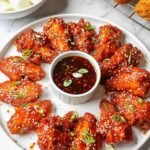
Korean Fried Chicken Recipe
- Prep Time: 1 hour 10 minutes
- Cook Time: 30 minutes
- Total Time: 1 hour 40 minutes
- Yield: 8 servings 1x
- Category: Appetizer
- Method: Frying
- Cuisine: Korean
- Diet: Halal
Description
Crispy and flavorful Korean Fried Chicken wings that are double fried for the perfect crunch and coated with either a sweet and tangy soy garlic sauce or a spicy gochujang sauce, making them an irresistible appetizer or main course.
Ingredients
Chicken and Marinade
- 3 lbs chicken wings – about 30 to 36 wings
- 2 cloves garlic – finely minced
- ½ teaspoon ginger – grated
- 1 Tablespoon mirin
- 2 teaspoons sea salt
- vegetable oil for frying
Dry Batter
- 2 cups flour or cornstarch or potato starch
- 1 teaspoon baking powder
Soy Garlic Sauce – Sweet and Tangy
- ¼ cup honey
- ¼ cup soy sauce
- 3 cloves garlic – minced
- ½ teaspoon ginger – grated
- 3 Tablespoons rice wine vinegar
- 2 Tablespoons hoisin sauce
- 1 Tablespoons toasted sesame oil
Gochujang Sauce (Yangnyeom Sauce) – Sweet and Spicy
- ¼ cup gochujang
- ¼ cup sugar
- 3 Tablespoons strawberry jam – seedless variety
- 2 ½ Tablespoons soy sauce
- 1 ½ Tablespoon rice wine vinegar
- 1 Tablespoon honey
- 1 Tablespoon ketchup
- 6 Tablespoons water
- 2 cloves garlic – minced
- ½ teaspoon ginger – grated
- ½ teaspoon salt
Instructions
- Marinate the Chicken: Season the wings with minced garlic, grated ginger, sea salt, and mirin. Mix well and let the wings marinate for at least 1 hour to absorb the flavors.
- Prepare the Dry Batter: In a large bowl, combine flour (or cornstarch or potato starch) with baking powder. Toss each wing thoroughly in the dry batter, ensuring every surface is completely coated.
- First Fry: Heat vegetable oil in a large pot to 345 degrees Fahrenheit with 1 ½ to 2 inches of oil depth. Fry the wings in batches, avoiding overcrowding, for 5 to 7 minutes until partially cooked. Drain the wings on a cooling rack between batches.
- Second Fry: Increase the oil temperature to 375 degrees Fahrenheit. Double-fry the wings in batches until they turn crunchy and golden brown on the exterior. Drain again on a cooling rack to maintain crispiness.
- Make the Sauces: For either sauce, combine all respective ingredients in a medium pot and bring to a boil over medium-high heat. Reduce the sauce for 2 to 3 minutes until slightly thickened. Test the consistency by dripping a small amount on a plate and cooling it; thin with water if necessary.
- Coat and Serve: While the sauce is still hot, drizzle over the fried wings and toss to coat evenly. Serve immediately. Optionally, serve plain with Korean pickled radish on the side.
Notes
- Serve with Korean pickled radish to complement the flavors.
- Choose flour, cornstarch, or potato starch for the batter based on preferred texture and flavor differences.
- Double frying ensures the wings are crispy and fully cooked by first rendering fat and then crisping the crust.
- Store leftover wings in an airtight container in the refrigerator for up to 3 days.
- Reheat leftovers in the oven at 350 degrees Fahrenheit until warmed through, covering with foil if sauce starts to burn.
- Wet batter alternative: mix 2.5 cups water, 1.25 cups cornstarch, 1.25 cups flour, and 1 teaspoon baking powder; coat wings in cornstarch before dipping into wet batter and fry immediately.
Nutrition
- Serving Size: 1 serving
- Calories: 450 kcal
- Sugar: 12 g
- Sodium: 800 mg
- Fat: 25 g
- Saturated Fat: 5 g
- Unsaturated Fat: 15 g
- Trans Fat: 0 g
- Carbohydrates: 28 g
- Fiber: 1 g
- Protein: 30 g
- Cholesterol: 110 mg


