

There’s something so joyful about an Easter Cake with Blue Buttercream and Coconut Nest Recipe—it immediately feels festive and fun. The soft pastel blue frosting paired with a crunchy coconut nest filled with charming speckled eggs makes this cake a showstopper at any spring gathering.

Why You’ll Love This Recipe
- Beautiful Presentation: The pastel blue buttercream with coconut nests and speckled eggs looks effortlessly festive and elegant.
- Delicious Texture Play: Smooth, fluffy buttercream contrasts perfectly with the toasted coconut’s crunch.
- Customizable Layers: Use your favorite cake base—vanilla or otherwise—to suit your taste and occasion.
- Perfect for Spring Gatherings: This cake brings both a pop of color and fun Easter vibes to any dessert table.
Ingredients You’ll Need
The magic in this Easter Cake with Blue Buttercream and Coconut Nest Recipe is in how the rich, buttery frosting melts into the soft cake and the coconut adds just the right crunch. Each ingredient works together to create that perfect balance.

- Vanilla Cake: I love using a three-layer vanilla cake because it’s sturdy but soft, and layers well with buttercream.
- Unsalted Butter: Softened to just the right temperature, it whips up fluffy and helps get that pale blue color without turning green.
- Soft Icing Sugar (Powdered Sugar): Always sift it to keep your buttercream velvety smooth.
- Vanilla Extract: Real vanilla enhances the flavor of the frosting beautifully.
- Blue Gel Food Coloring: Gel coloring gives you better control over the pastel shade without watering down the frosting.
- Salt: Just a pinch balances the sweetness in the buttercream.
- Cocoa Powder: Used for gentle speckles that add a rustic, artistic touch to the frosted cake.
- Boiling Water: To mix with cocoa for speckling—this makes the cocoa spread nicely.
- Coconut Flakes: Toasted to golden perfection, these create the nest with subtle, sweet crunch.
- Small Easter Eggs: I like pastel-colored speckled eggs, but any mini chocolate eggs will do.
Variations
One of the things I love about this Easter Cake with Blue Buttercream and Coconut Nest Recipe is how easy it is to tweak. You can switch up the cake flavor or even the colors to suit your festivities and personal style.
- Chocolate Cake Variation: I once swapped the vanilla layers for a moist chocolate cake, and it paired fantastic with the pastel blue buttercream for an unexpected but delightful combo.
- Food Coloring Alternatives: If you want a different pastel vibe, try pale pink or lavender gel food coloring for the frosting—it looks equally gorgeous.
- Vegan-Friendly Twist: Use dairy-free butter and egg-free cake for a vegan Easter celebration; I tested this with coconut cream frosting—also delicious!
- Sugar-Free Option: Swap powdered sugar for a powdered erythritol blend to reduce sugar—just keep an eye on texture differences.
How to Make Easter Cake with Blue Buttercream and Coconut Nest Recipe

Step 1: Prep Your Cake Layers
Start by trimming the tops of your cake layers if they’re uneven—this makes the final cake look neat and tidy. Once trimmed, pop the layers into the fridge until thoroughly chilled. Chilling the cake is a game-changer; it keeps crumbs in place when you frost and makes the whole process so much cleaner and easier.
Step 2: Toast the Coconut Nest
Preheat your oven to 160°C (325°F) and spread coconut flakes on a baking tray. Toasting takes about 6 to 10 minutes, but don’t wander off! The coconut can go from golden to burnt really quickly, so stir every couple of minutes and watch for that beautiful golden color. Once done, set them aside to cool—this will give your nests a lovely nutty aroma and crunch.
Step 3: Make the Pastel Blue Buttercream
Beat the softened butter on a high speed for about 3 minutes until it lightens to almost white – this part is key to getting the right pale blue without it turning green. Add your sifted icing sugar gradually in three batches, starting the mixer slow to avoid a powder cloud, then speeding up to combine. After the sugar, add vanilla and salt, beating again at high speed for 2 minutes to get a fluffy, dreamy texture.
Now comes the coloring trick: remove a tablespoon of frosting, add 1 drop of blue gel, mix it well, then return a teaspoon of that back into your main frosting and beat it in. Keep adding colored frosting bit by bit until you get that perfect shade. This method keeps you in control so you won’t accidentally go overboard.
Step 4: Assemble and Decorate the Cake
Spread about ¾ cup of buttercream between each cake layer. Once stacked, cover the sides and top with the remaining frosting—don’t be shy here, a generous coating looks amazing and keeps it moist. Save about half a cup leftover just in case. For the speckles, mix cocoa powder with boiling water, dip your toothbrush into the mixture, and flick the bristles gently to create delicate chocolate specks across the cake. Trust me, practicing in the sink first saved me from a messy disaster!
Finally, build the coconut nest by piling toasted coconut in the center, creating a little well, then nestle your Easter eggs inside. I also create a coconut rim around the base and dot it with more eggs for that extra festive touch.
Pro Tips for Making Easter Cake with Blue Buttercream and Coconut Nest Recipe
- Softening Butter Just Right: I learned the hard way that butter must be softened but still cool, so it whips nicely and doesn’t turn your frosting runny.
- Color Gradually: By mixing colored frosting back into the batch bit by bit, you avoid those ugly, overpowering blue patches.
- Chill Cake Layers: Always chill your layers before frosting—warm cakes shed crumbs everywhere and make the frosting messy.
- Speckling Technique: Angle the toothbrush at about 45° facing away from the cake so you get nice fine speckles instead of big drips.
How to Serve Easter Cake with Blue Buttercream and Coconut Nest Recipe

Garnishes
I usually keep it simple with the pastel speckled eggs because they add that perfect colorful, festive pop. Sometimes I add delicate edible flowers or tiny fresh mint leaves around the coconut nest for a fresh spring feel—looks stunning and tastes lovely too.
Side Dishes
This cake pairs beautifully with light sides like fresh fruit salad or a citrusy sorbet. For drinks, a mild herbal tea or a sparkling lemonade balances the richness of the buttercream nicely without overpowering the flavors.
Creative Ways to Present
Once, I turned this cake into mini individual cakes by layering smaller rounds and decorating each with a tiny coconut nest and an egg on top—perfect for gifting or a smaller gathering. You can also place the cake on a beautiful wooden board and scatter some loose toasted coconut and edible flowers around for an inviting display.
Make Ahead and Storage
Storing Leftovers
Once assembled, I keep this Easter cake covered in the fridge, tightly wrapped with cake domes or plastic wrap. It stays moist and fresh for up to 4 days, which means it’s perfect for making ahead of your Easter gathering without worrying about freshness.
Freezing
I’ve frozen leftover frosting in an airtight container for months with no issues. I don’t recommend freezing the fully decorated cake because of the coconut nest, but you can freeze the cake layers and thaw when needed—just reassemble and frost fresh.
Reheating
Since it’s a buttercream cake, I don’t reheat it, but I let refrigerated slices sit at room temperature for 20-30 minutes before serving—it softens the frosting and brings out the cake’s true flavor.
FAQs
-
Can I use a different color for the buttercream instead of blue?
Absolutely! You can use any gel food coloring to create your favorite pastel shade. Just use the gradual mixing trick from the recipe to control how intense the color gets without making the frosting watery.
-
How far in advance can I assemble this cake?
You can assemble the cake a day ahead and keep it refrigerated. This actually helps the flavors meld and makes slicing easier. Just ensure it’s well covered to prevent drying out or absorbing fridge odors.
-
What if I don’t like coconut?
If coconut isn’t your thing, you could switch the nest out for chopped nuts, toasted oats, or even candy grass to keep that Easter nest vibe but with a flavor you prefer.
-
Why do I need to chill the cake layers before frosting?
Chilling firms up the cake, which reduces crumbs and helps the frosting go on smoothly without mixing in bits of cake. It also makes for cleaner, neater layers.
-
Can I make this cake vegan?
Yes! Use a vegan cake base and substitute vegan butter and powdered sugar for the frosting. You may want to add a little plant-based milk to adjust the consistency, but otherwise the method stays the same.
Final Thoughts
I absolutely love how this Easter Cake with Blue Buttercream and Coconut Nest Recipe turns out every time. It’s one of those cakes that feels special enough for a holiday but simple enough to make in your own kitchen without stress. When I first made it, my family went crazy for that perfect pastel hue and coconut crunch, and I’m sure you’ll find the same magic. Give it a try—you’ll be that friend everyone asks to bring dessert.
Print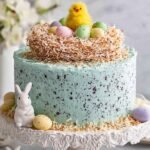
Easter Cake with Blue Buttercream and Coconut Nest Recipe
- Prep Time: 45 minutes
- Cook Time: 30 minutes
- Total Time: 1 hour 15 minutes
- Yield: 12 servings 1x
- Category: Dessert
- Method: Baking
- Cuisine: Western
Description
A delightful Easter Cake featuring a three-layer vanilla cake with pastel blue vanilla buttercream frosting, cocoa speckles, toasted coconut flakes, and a festive nest of pastel-colored Easter eggs. Perfect for celebrating the holiday with a beautiful and tasty centerpiece.
Ingredients
Cake
- 1 Vanilla Cake, 3 layers (20cm/8″ cake of choice)
Pastel Blue Vanilla Buttercream
- 340 g unsalted butter, 1.25 cm / ½” cubes, softened to 18°C/64°F
- 750 g soft icing sugar / powdered sugar, sifted
- 3 tsp vanilla extract
- 1 – 2 drops blue gel food colouring (or 1 – 2 tsp blue food colouring)
- 1/8 tsp salt
Frosting Speckles
- 1 tbsp cocoa powder (unsweetened or sweetened)
- 3 tbsp boiling water
- Toothbrush (or basting brush) for speckling
Decorating
- 2 cups coconut flakes (or shaved)
- 200 g small Easter eggs (pastel coloured speckled)
Instructions
- Prepare the Cake Layers: Trim the top of the cake layers if needed to make them level for better aesthetics. Place the cake layers in the refrigerator to chill thoroughly so frosting will be easier and crumbs won’t spread.
- Toast the Coconut: Preheat the oven to 160°C/325°F (140°C fan). Spread coconut flakes evenly on a baking tray. Bake for 10 minutes, stirring every 2 minutes until golden brown. Remove and let it cool completely.
- Make the Buttercream Frosting: Beat the softened butter in a stand mixer at speed 8 for 3 minutes until the butter turns from yellow to almost white. Gradually add sifted icing sugar in three batches, starting on speed 1 to incorporate and increasing speed as you mix. Add vanilla extract and salt, then beat at speed 8 for 2 minutes until fluffy and pale.
- Color the Frosting: Remove 1 tablespoon of frosting into a small bowl, add one drop of blue gel food coloring, and mix well. Gradually add coloured frosting teaspoon by teaspoon back into the main frosting, beating after each addition until desired pastel blue tone is achieved. Scrape down the sides of the bowl as needed.
- Prepare Speckles Mixture: Mix cocoa powder with boiling water until smooth and set aside for speckling the cake.
- Assemble and Frost the Cake: Spread about 3/4 cup of frosting between each cake layer. Use the remaining frosting to cover the sides and top of the cake evenly. You will likely have approximately 1/2 cup frosting left over.
- Speckle the Cake: Place a backboard behind the cake to catch splatters. Dip a toothbrush into the cocoa speckles mixture, then use your fingers to flick speckles onto the cake’s top and sides. Angle the toothbrush 45 degrees when speckling the top to avoid large drips.
- Decorate with Coconut and Easter Eggs: Create a coconut nest by piling toasted coconut in the middle of the top surface and arranging small Easter eggs in the nest. Also, form a mound of coconut along the base of the cake and dot with additional Easter eggs.
- Serve and Enjoy: Present the cake proudly on your table and enjoy basking in the compliments it receives.
Notes
- You can use any vanilla cake recipe you prefer. This recipe uses a 3-layer 20cm/8″ vanilla cake.
- The frosting quantity is for a 3-layer cake and may leave some extra; leftover frosting freezes well for up to 3 months.
- Adjust buttersoftening carefully; butter should be soft but still cool to allow proper aeration and achieve a white frosting base.
- Using gel food coloring in small increments helps control the pastel blue shade and prevents turning green due to yellow butter.
- Small pastel colored speckled Easter eggs work best for decoration but any small candy eggs can be substituted.
- Toasted coconut should be watched carefully as baking times vary with sugar content; stir frequently.
- The assembled cake stays fresh up to 4 days when stored properly; check the vanilla cake recipe for specific storage instructions.
Nutrition
- Serving Size: 1 slice
- Calories: 420 kcal
- Sugar: 45 g
- Sodium: 150 mg
- Fat: 22 g
- Saturated Fat: 13 g
- Unsaturated Fat: 7 g
- Trans Fat: 0 g
- Carbohydrates: 50 g
- Fiber: 1 g
- Protein: 3 g
- Cholesterol: 60 mg


